
I am a huge fan of folkhorror. Grew up watching The Wicker Man. Later added Midsommar and Frewaka to my stack of favorite movies. Such a rich subgenre of horror to dig into and get dirty with. However, I do feel like there’s more to the genre that we sadly don’t talk about enough.
Folk Horror Isn’t an Aesthetic. It’s a System.
There’s a persistent idea that folk horror is defined by how it looks. When we talk about folkhorror we tend to focus on movies and stories with the aesthetics of pastoral settings, forests, and Pagan worship.
Something rural. Something distant. Something safely contained in the past.
But that definition breaks down the moment you look at how these stories actually function. Folk horror is not an aesthetic, its a system. A system built on repetition, belief, location, communal memory, and consequence
Because of this, some of the most recognizable horror films of the last fifty years aren’t just folkhorror adjacent. They’re active participants.
Candyman
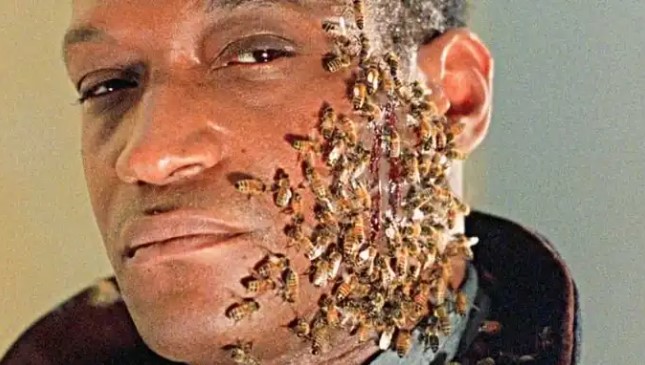
We dare you to say his name five times.
The Candyman, a murderous soul with a hook for a hand, is accidentally summoned to reality by a skeptic grad student researching the monster’s myth.
Candyman is the clearest example of this system at work:
He is invoked through ritual (“say his name five times”)
He exists within a specific community and place
His presence is sustained through belief and retelling
His origin is tied to real historical trauma
Candyman does not exist in spite of the story, he exists because of it. This is folklore in its most recognizable form:
a narrative that becomes real through repetition and participation.
Friday the 13th
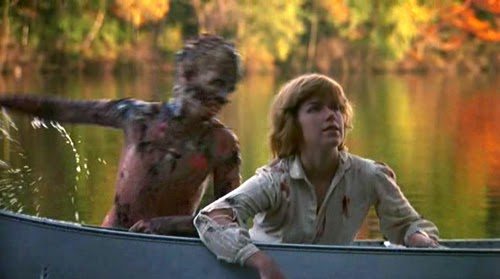
They were warned…They are doomed…And on Friday the 13th, nothing will save them.
Camp counselors are stalked and murdered by an unknown assailant while trying to reopen a summer camp that was the site of a child’s drowning.
At first glance, Friday the 13th looks like a straightforward slasher. We got teens having sex and then gorey deaths occure because of it. Cut and dry…or wet…you get the point. However, if you look closer at how it behaves:
Camp Crystal Lake is a cursed location
The violence is cyclical
Those who enter are punished for transgression
Jason Voorhees functions less like a man and more like a consequence.
This is not just a killer stalking victims. It is a place enforcing a pattern.
A Nightmare on Elm Street
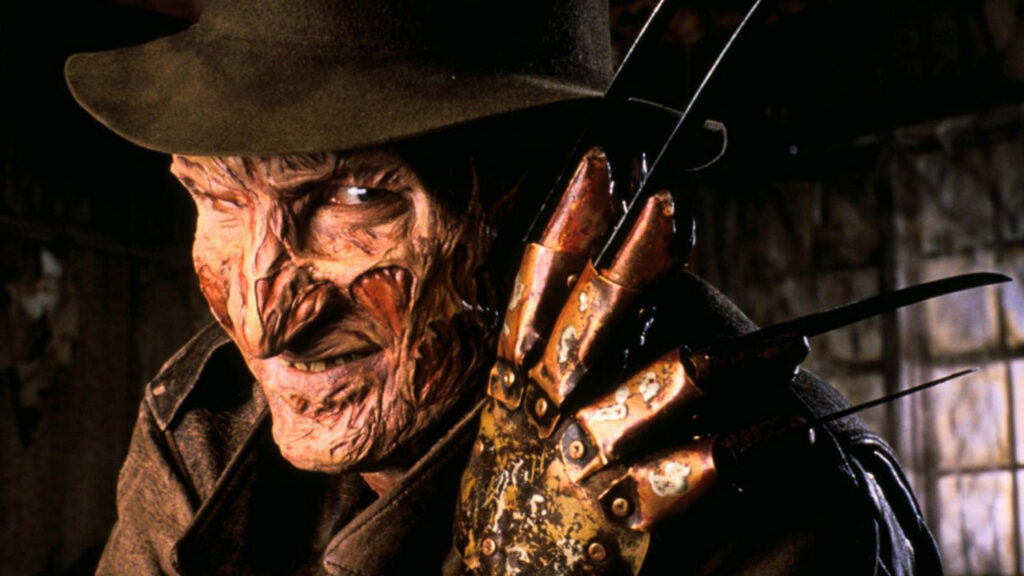
If Nancy doesn’t wake up screaming, she won’t wake up at all.
Teenagers in a small town are dropping like flies, apparently in the grip of mass hysteria causing their suicides. A cop’s daughter, Nancy Thompson, traces the cause to child molester Fred Krueger, who was burned alive by angry parents many years before. Krueger has now come back in the dreams of his killers’ children, claiming their lives as his revenge. Nancy and her boyfriend, Glen, must devise a plan to lure the monster out of the realm of nightmares and into the real world…
Here’s the one where I tend to lose people when I make this argument. Freddy Kruger as a folklore villain in suburbia tends to make naysayers or those on the fence about this flavor of folkhorror roll their eyes. Its a step too far, Dex! I can hear you say. But bear with me.
Freddy Krueger pushes the foundation of folkhorror further.
He spreads through a shared narrative (the rhyme)…no, he doesn’t just spread. Let’s take it further. He BELONGS. Kruger is tied to a buried communal crime in a specific area. His story isnt random, its rooted in a specific place and a specific community, shaped by a shared act of violence that was never meant to surface again. The rhyme, the dreams, the fear…its all mechanisms of folklore transmission.
Folklore does not require a forest. It requires a system that remembers. Freddy exists in memory, in fear, in story. And like all effective folklore, once you know it, you are already part of it.
Folklore of Place
A thread connecting these films that’s easy to miss if you’re only looking at aesthetics, they are all anchored to place.
Candyman is tied to Cabrini-Green
Freddy Krueger belongs to Elm Street
Jason is bound to Camp Crystal Lake
Every one of these stories has an address.
These aren’t just settings. They are containers for the story. In folklore, place matters as a site of memory
or as a boundary marker between the regular world and the world where folklore is active. You don’t just hear the story. You hear where it happened and because it happened here, the place legitimizes the story.
In The Wicker Man the whole story was tied to Summerisle. The location was necessary to the storytelling and the folklore around it because Summerisle isn’t just a scenic location, its where a pagan community sacrifices.
Cabrini-Green isn’t just where Candyman appears—it’s where the history that created him lives.
Elm Street isn’t just a neighborhood—it’s where a community buried its guilt.
Camp Crystal Lake isn’t just a camp—it’s where the violence keeps repeating.
Location in folklore whispers not just that this happened here but that it can happen again…
Folklore of Community
Folklore doesn’t just belong to locations.
It belongs to communities that carry it, repeat it, reshape it, and sometimes, try to bury it. In each of these films, the horror is not just tied to a place. It is tied to a group that knows the story.
In Midsommar the core of the story and what made it folkhorror was tied to Hårga and its community. That story could have been told about other cults, sure but the effect is still the same – community focused horror. Folklore requires a community to share the story.
Candyman doesn’t belong to just anyone. He belongs to the Black community connected to Cabrini-Green. (This is added to in the later reboot where Candyman is not a single entity. He is a collective memory given form or a story that refuses to be erased.)
Jason’s reach extends beyond the lake. He belongs to counselors, campers, and the nearby town. People who tell the story, warn outsiders, and, crucially, fail to stop the cycle. (Even in versions where Jason is less supernatural, the structure remains. The community knows something is wrong and, still, the pattern repeats.)
Freddy belongs to Elm Street, specifically to the parents who created him and the children who inherit him (Inheritance and passing on the myth being a huge theme in folkhorror)
Functional Folk Horror
Whether we call this Mythic Cycle Horror or Systemic Folkhorror or Urban & Contemporary Folklore Horror, the outcome is the same. These movies can fall under the same umbrella as the aesthetics driven folkhorror movies like Midsommar and The Wicker Man even if they feel worlds apart.
Because the question isn’t whether these films look like folkhorror. The question is whether they behave like folklore. If so, then maybe folklore isn’t something we left behind.
Maybe it’s something we’re still creating.